

Age in the 2025 Nebraska State Legislature
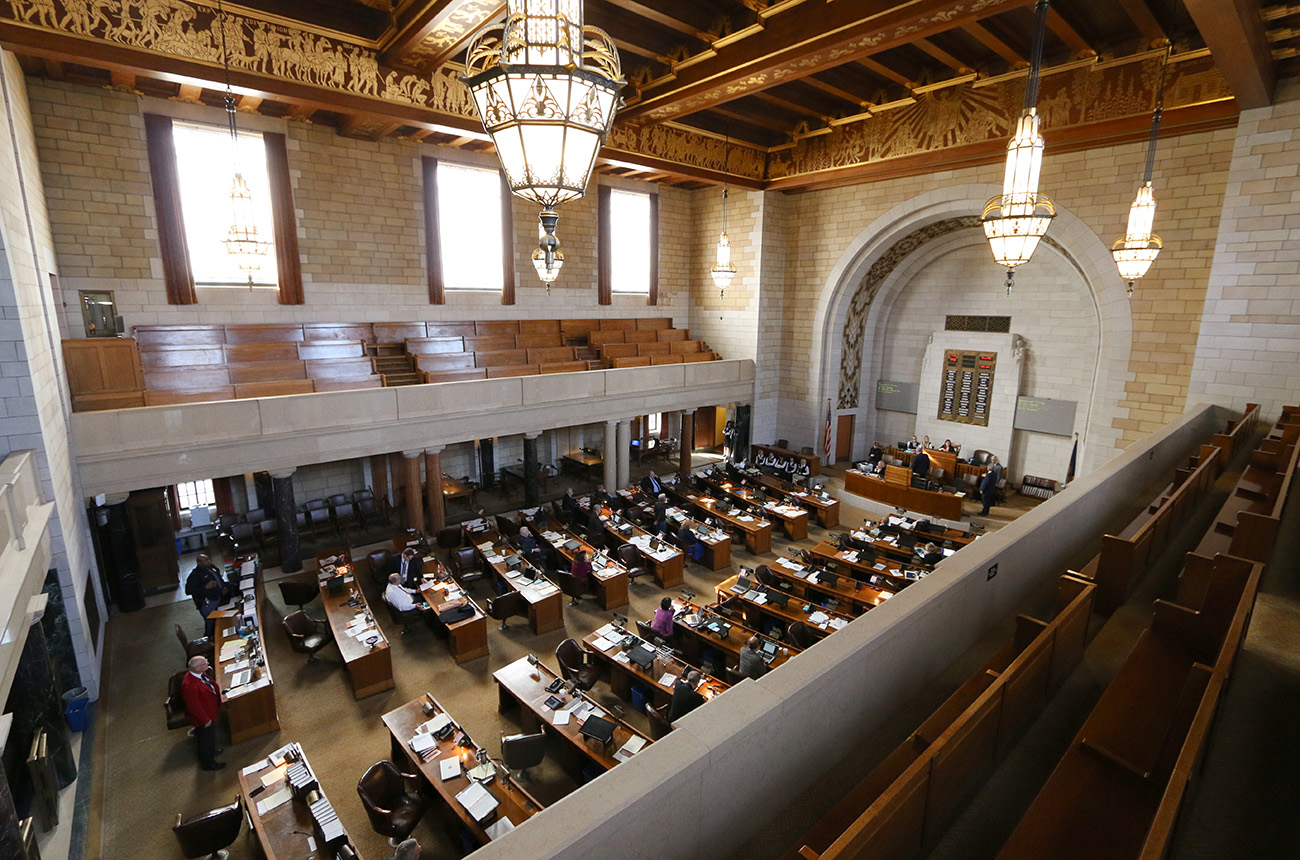
The state of Nebraska held its state legislative elections for a new Legislature on November 4th, 2024. Nebraska has a unique legislative structure, with a single unicameral legislative body. Nebraska retains one single standalone legislative body; no upper or lower chambers exist. Furthermore, all Nebraska Legislators are elected in non-partisan elections. Among the members elected, 2 were aged 35 or younger on Election Day in 2024. Below is a map of these representatives within the Unicameral Nebraska State Legislature.
Nebraska Demographic Background in the 2024 Election
Preliminary estimates from CIRCLE at Tufts University indicate that 42% of young people aged 18–29 voted in the 2024 election, with turnout surpassing 50% in key battleground states. Nearly 50 million young citizens were eligible to vote nationwide, including over 8 million who turned 18 since the 2022 midterms.
According to the Pew Research Center, Millennials surpassed Baby Boomers in 2020 to become the largest generation in the U.S., making up 31% of the population, followed closely by Boomers at 30.9%. Generation X accounts for 28%, while the Silent Generation makes up just 9.9%. In Nebraska, young voters played an outsized role in shaping both state and national outcomes. At the presidential level, Nebraska is one of only two states that split their electoral votes by congressional district. This resulted in a competitive race for president in Nebraska’s 2nd Congressional District, mostly centered around the Omaha metro area. At the congressional level, according to the Youth Electoral Significance Index (YESI), Nebraska’s 2nd Congressional District was also among the top YESI-rated contests, ranking 17th nationwide.
The Nebraska Legislature 2025 Session
Below is an overview of age dynamics in the newly elected Nebraska Legislature.
- The average age of Nebraska Legislature members is 57.68 years old
- The youngest legislator, Beau Ballard, was born in 1994
- The oldest legislator, Merv Riepe, was born in 1942
- 2 legislators are Young Elected Leaders aged 35 or younger as of Election Day 2024
Generational Breakdown
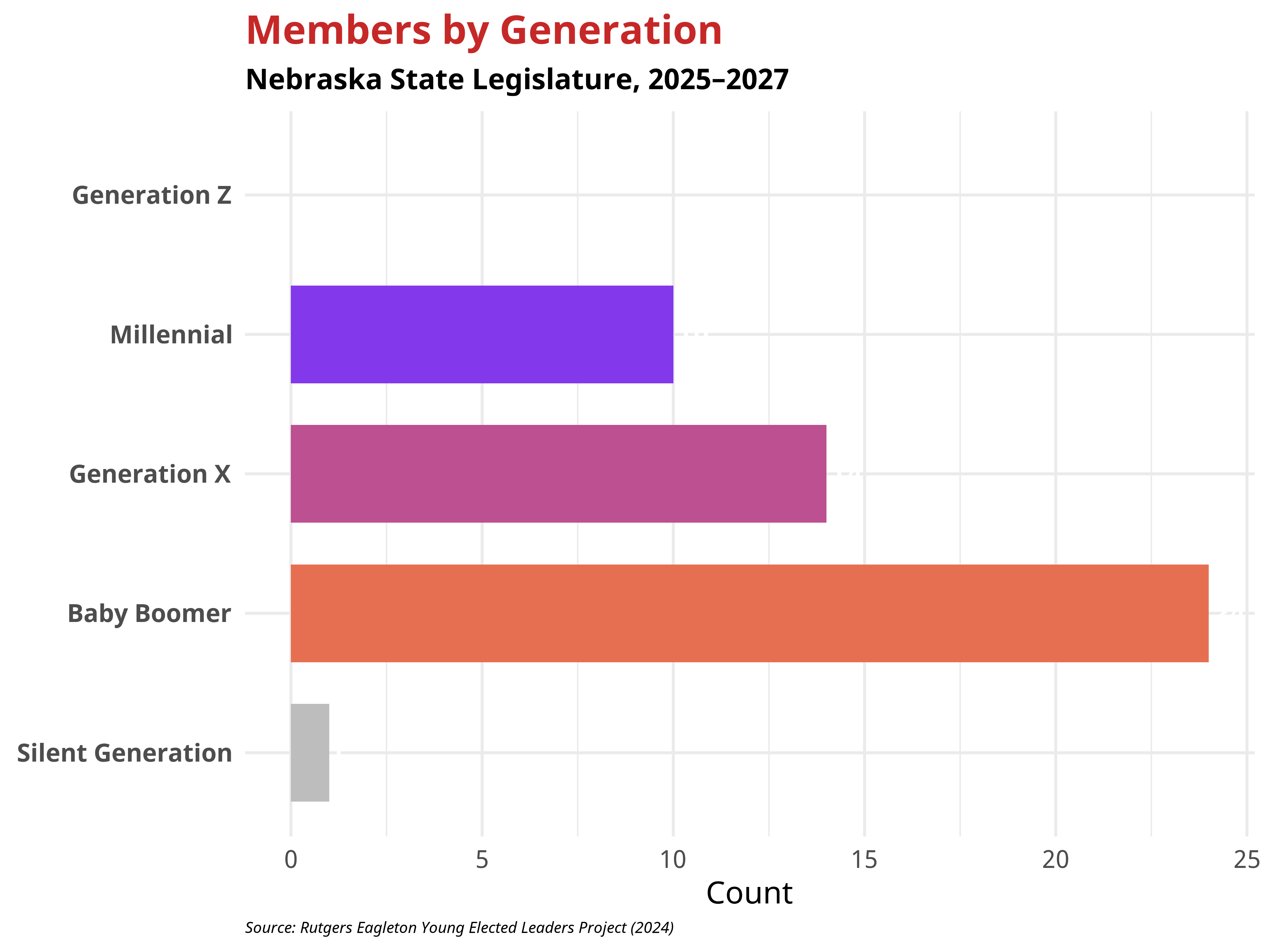
Within the Nebraska Legislature, most representatives come from the Millennial, Generation X, or the Baby Boomer generation. Importantly, several members of the current Nebraska Legislature belong to Generation Z. Scroll below to see the generations in the Nebraska Legislature visualized.
Partisanship in the Nebraska Legislature
State Legislators in Nebraska all run in non-partisan elections. While parties do make unofficial endorsements, all elected officials are not bound by a political party. The chart below highlights age, with all members being considered officially non-partisan.
Young Elected Representatives – Nebraska Legislature
Following the 2024 State Legislative Elections in Nebraska, two members aged 35 or under were elected to the Nebraska Legislature. Below are both of these members, ordered from youngest to oldest, along with information about their local districts and party affiliation.
Young Elected Representatives — Nebraska Legislature
| Photo | Name | District | Birth year (Age on Election Day) | Year First Elected to Nebraska Legislature. |
|---|---|---|---|---|
 |
Beau Ballard (NP) | District 21 — Raymond, NE | 1994 (Age 30) | 2022 |
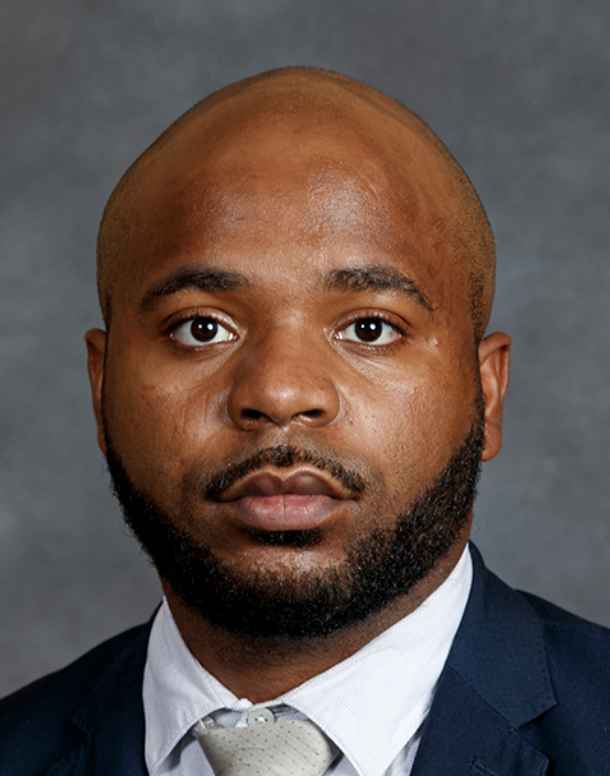 |
Terrell McKinney (NP) | District 11 — Omaha, NE | 1990 (Age 34) | 2020 |
Photos courtesy of the Nebraska Legislature member roster.
Gender in the Nebraska Legislature
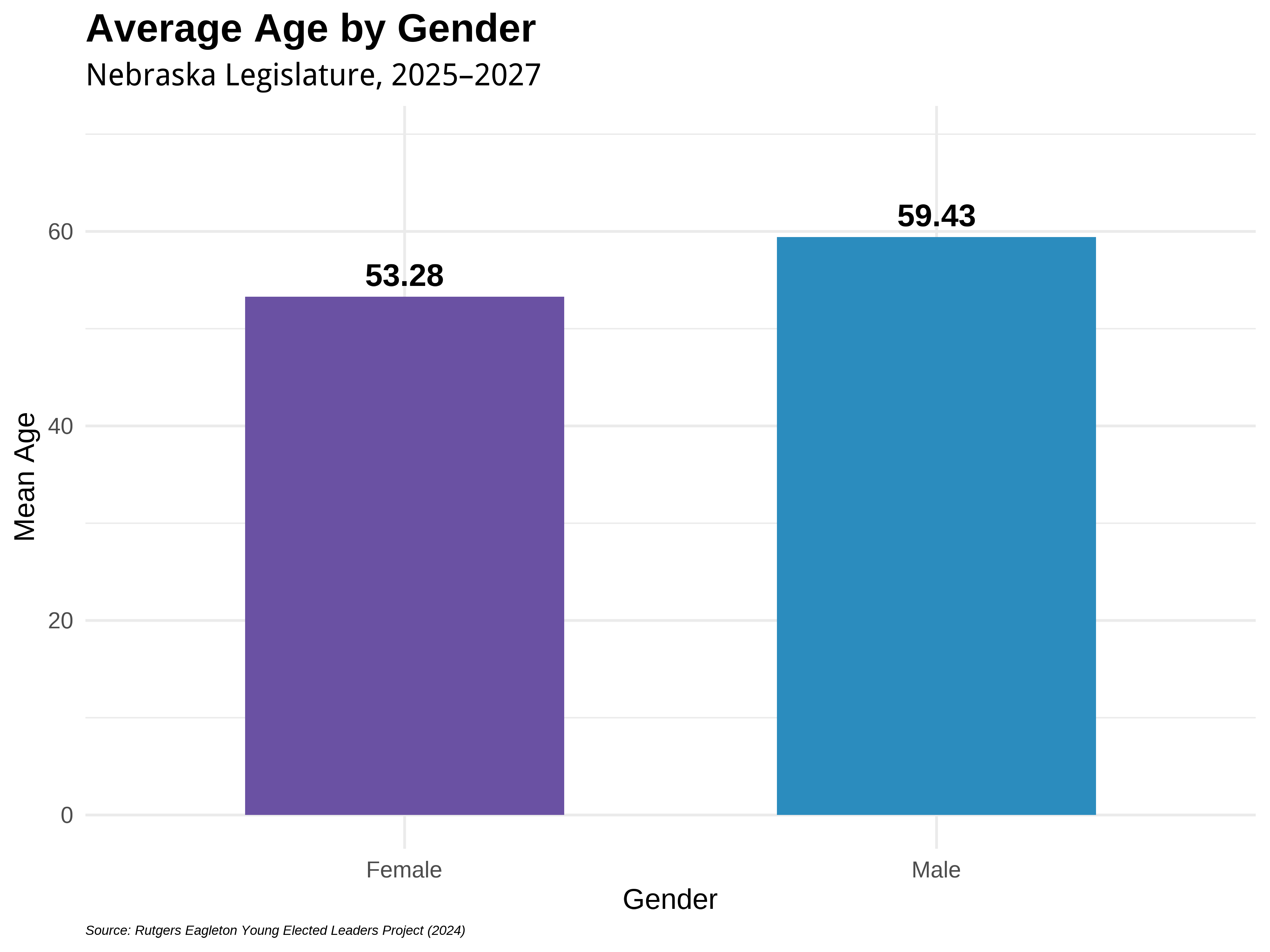
The Nebraska Legislature reflects a range of age and gender dynamics that help shape the composition of the state’s legislative body. Across all members, 71.43% are men, while women make up 28.57%. Men have a higher mean age than women in the current Nebraska Legislature. For male representatives, there was an average age of 59.43 years at the time of the election, compared to 53.28 years for their female colleagues. Of the 2 Young Elected Leaders, both are male.
Race and Ethnicity in the Nebraska Legislature
The racial and ethnic composition of the Nebraska Legislature varies across generations. In 2024, younger cohorts show more diversity, though the chamber overall remains majority White. The table below shows each generation’s distribution.
Generations by Race/Ethnicity in the Nebraska House of Representatives
| Ethnicity | Generation Z 1997 – |
Millennial Generation 1981 – 1996 |
Generation X 1965 – 1980 |
Boomer Generation 1946 – 1964 |
Silent Generation – 1946 |
Full Chamber |
|---|---|---|---|---|---|---|
| White/Caucasian | 7 (70%) | 14 (100%) | 21 (87.5) | 1 (100%) | 43 (87.76%) | |
| Black/African American | – | 2 (20%) | – | 1 (4.17%) | – | 3 (6.12%) |
| Hispanic/Latino | – | 1 (10%) | – | 1 (4.17%) | – | 2 (4.08%) |
| Hawaiian/Pacific Islander | – | – | – | 1 (4.17%) | – | 1 (2.04%) |
| Total | – | 10 (20.41%) | 14 (28.57%) | 24 (48.98%) | 1 (2.04%) | 100 (100%) |
The full Nebraska Legislature is comprised of 49 seats.
Notes
The Young Elected Leaders Project applies the generational categorization of the Pew Research Center:
- Silent Generation: 1928 – 1945
- Baby Boomer Generation: 1946 – 1964
- Generation X: 1965 – 1980
- Millennial Generation: 1981 – 1996
- Generation Z: 1997 – 2012
This analysis is based on data from the most recent state legislative election in Nebraska which took place on November 5th 2024.
Citation Guideline
In referencing the Young Elected Leaders Project in publication please use the following language: “The Young Elected Leaders Project is housed at the Center for Youth Political Participation at The Eagleton Institute of Politics, Rutgers University – New Brunswick.”
Bibliographic Citation For this document
Author: Young Elected Leaders Project
Corresponding Authors: George D. Quinn
Year: 2024
Title: Age in the 2025 Nebraska Legislature